
Art History Inspired
Mannerist Abstraction
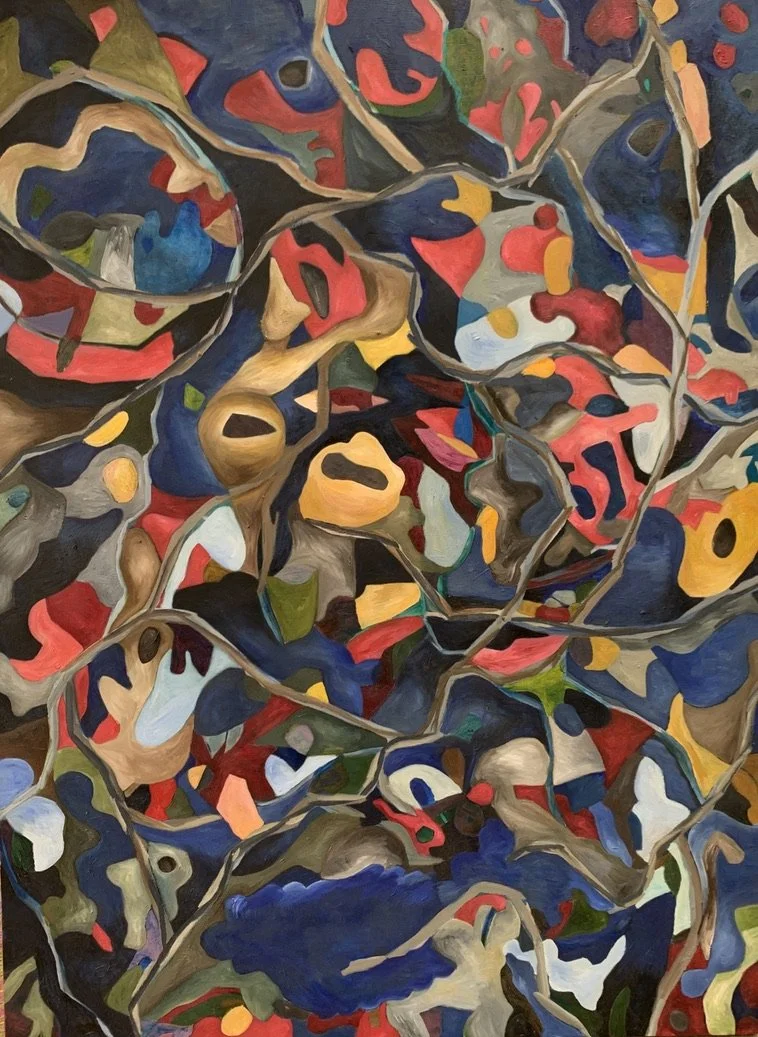
I’m drawn to the elongated and stylized forms that characterize Mannerist art, and in 2019 I began to make abstractions of Jacopo Pontormo’s Deposition from the Cross (c. 1525-28) five years before I ever saw it. Pontormo’s palette is like a confection of pastel tints, in contrast with the subject of the Virgin Mary’s reaction to the lowering of Christ’s body from the cross.. I’m fascinated by the he juxtaposition of positive and negative space in the forms of the painting, as well as the decorative arrangement of the figures which recalls late Gothic/pre Renaissance altarpieces.
For Untitled (Blue Pontormo) (2021) the 36 x 48 inch wood panel was covered in a mosaic-like collage of torn pieces of college Blue Books, before a blue ground was added. The imagery uses only line to delineate the forms. To speak her name is to call up pictures of people and places (2021) compresses the imagery from the painting and darkens the palette. When I finally saw Pontormo’s painting for the first time in Florence in 2024, the only surprise was the layout of the chapel in the church.
I explored the imagery in this painting by making dozens of gouaches on vellum and tracing paper trying different color palettes on the same hand drawn shapes. In 2023, sixteen of these 9 x 12 inch gouaches were assembled into a grid to make up the artwork, The World beyond intrudes into the world below (2023), shown between two sheets of 52 x 56 inch plexiglass.
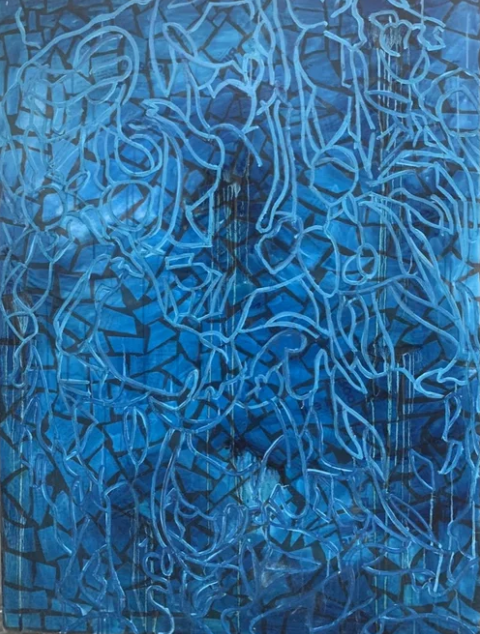
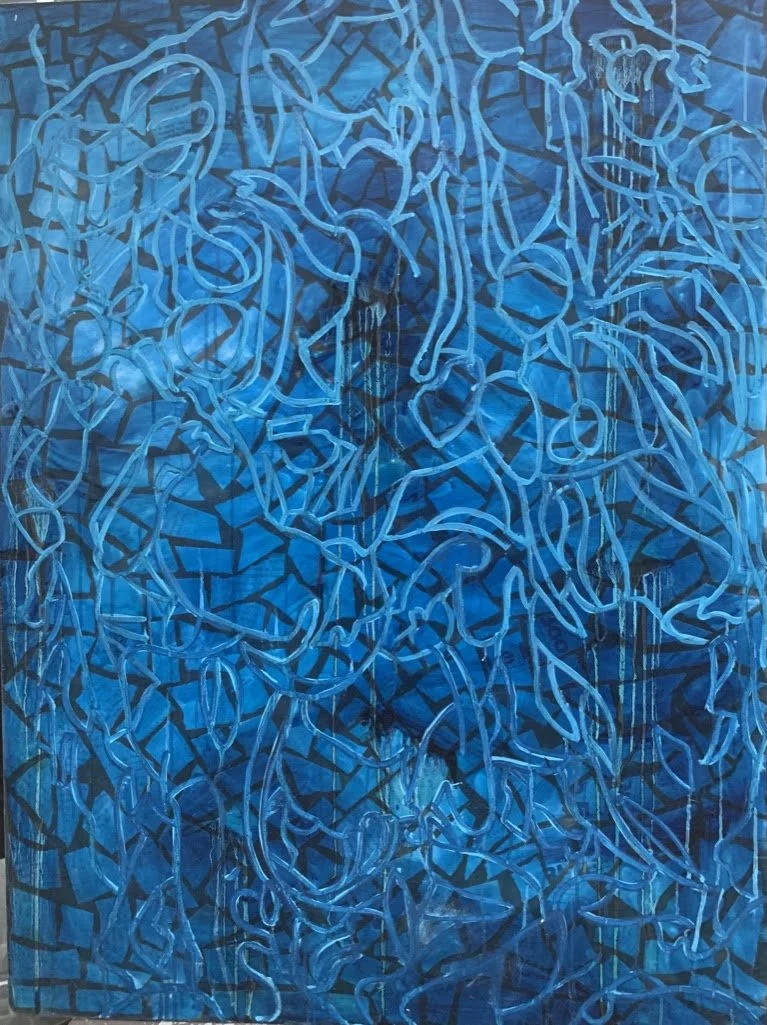
Roaring Springs Series; Untitled (Blue Pontormo abstraction) (2021) 36 x 48 in. Pontormo abstraction in line on blue book collaged ground.
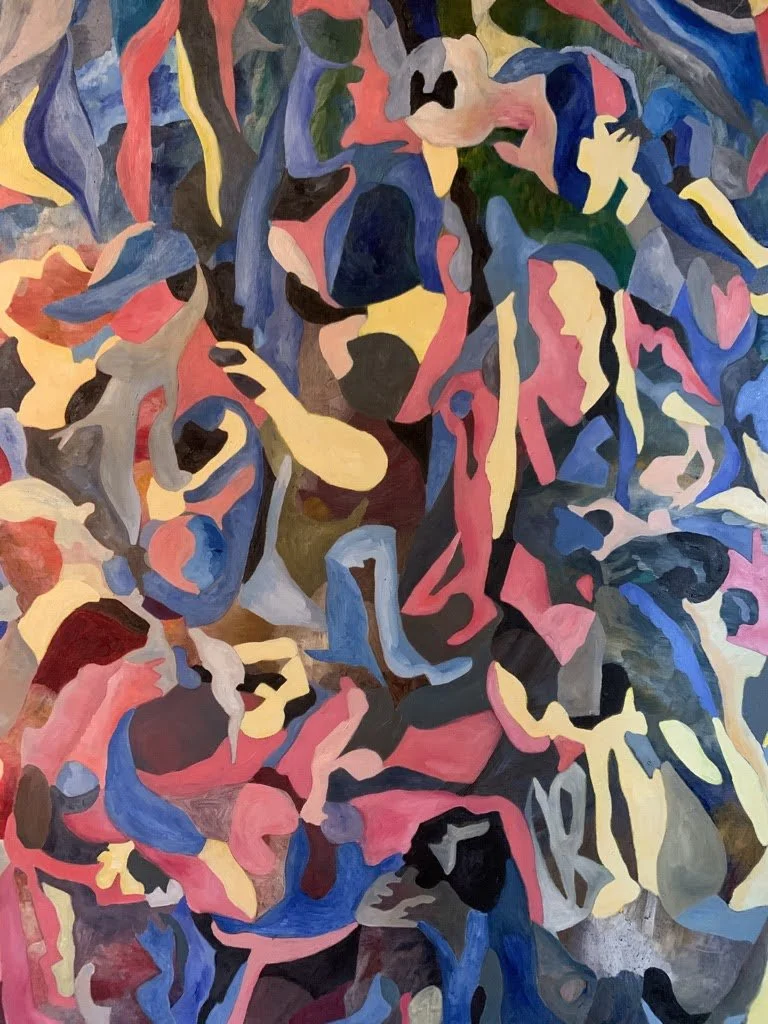
To speak her name is to call up pictures of people and places (Pontormo Abstraction) (2021) Oil on wood panel. 36 x 48 in.
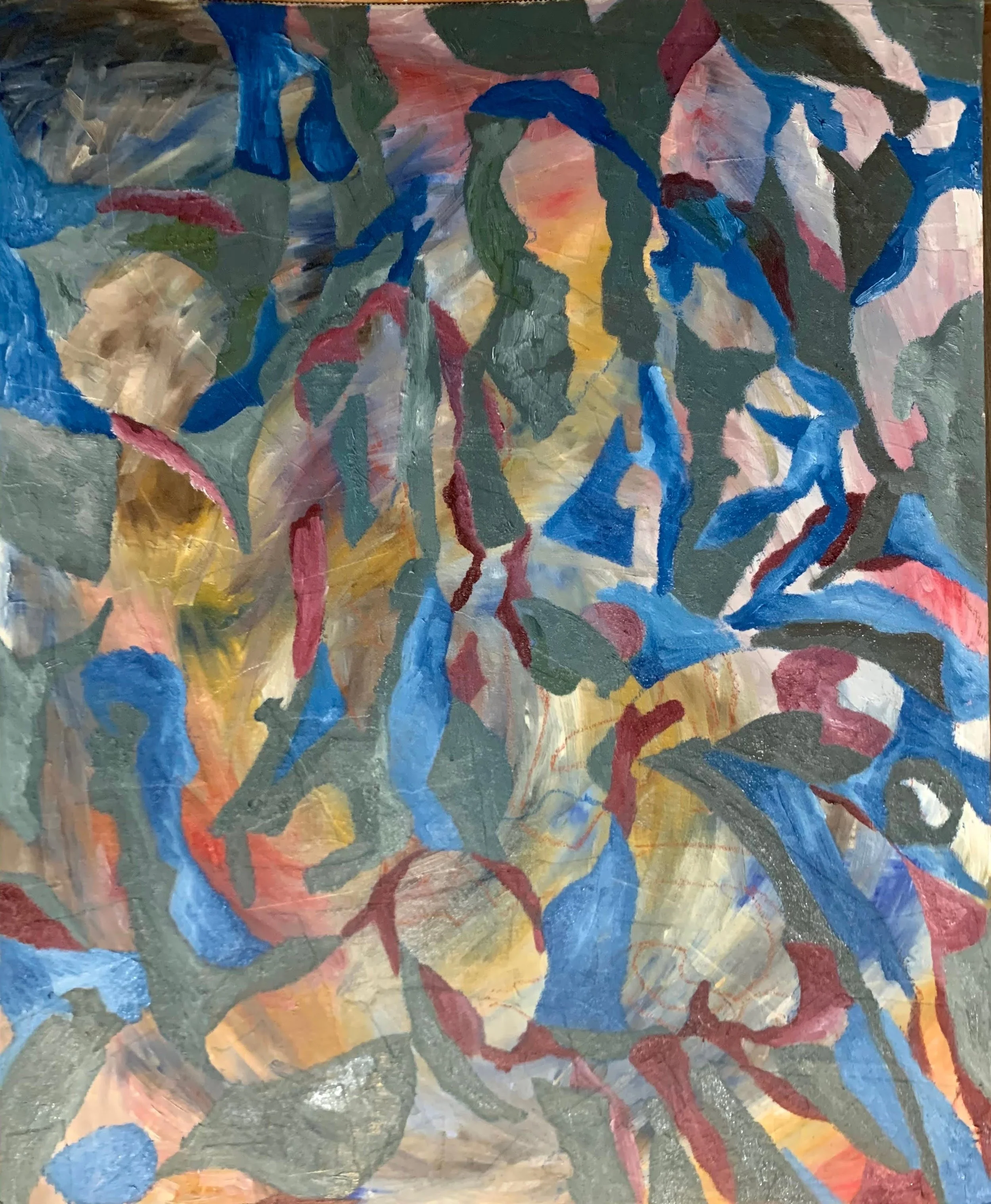
Roaring Springs Series: Myth as Measure (Pontormo Abstraction) (2021) Oil on collaged board. 16 x 20 in. Framed in gray.
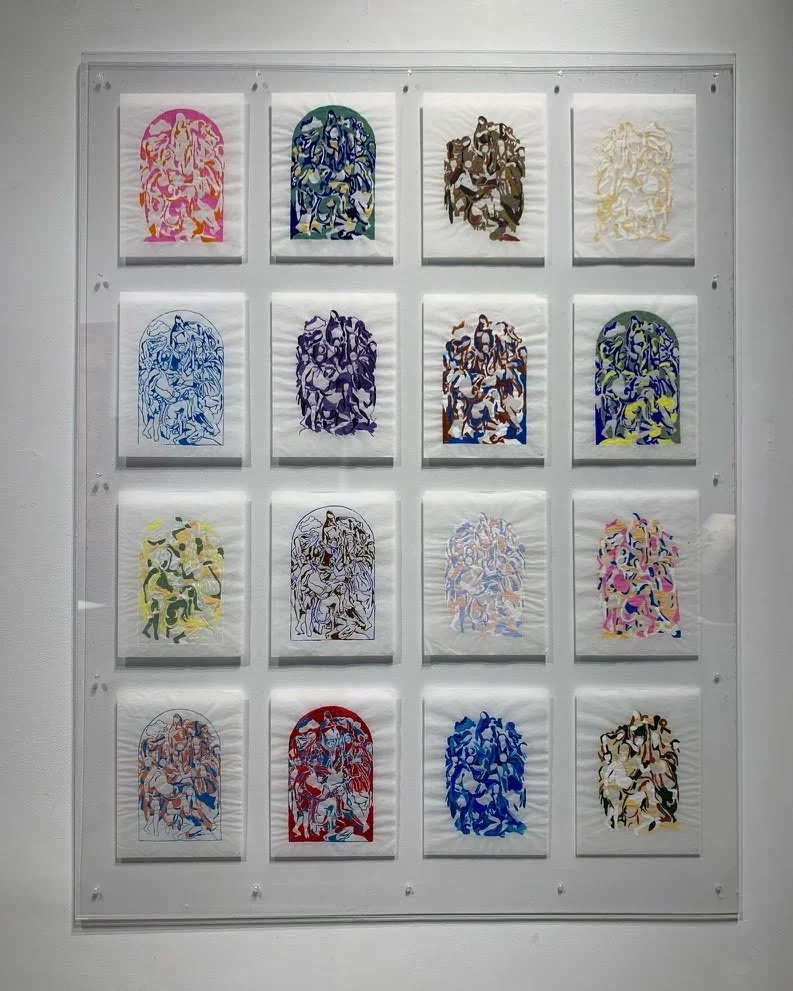
The World beyond intrudes into the world below (2023) Gouache on vellum in plexiglass
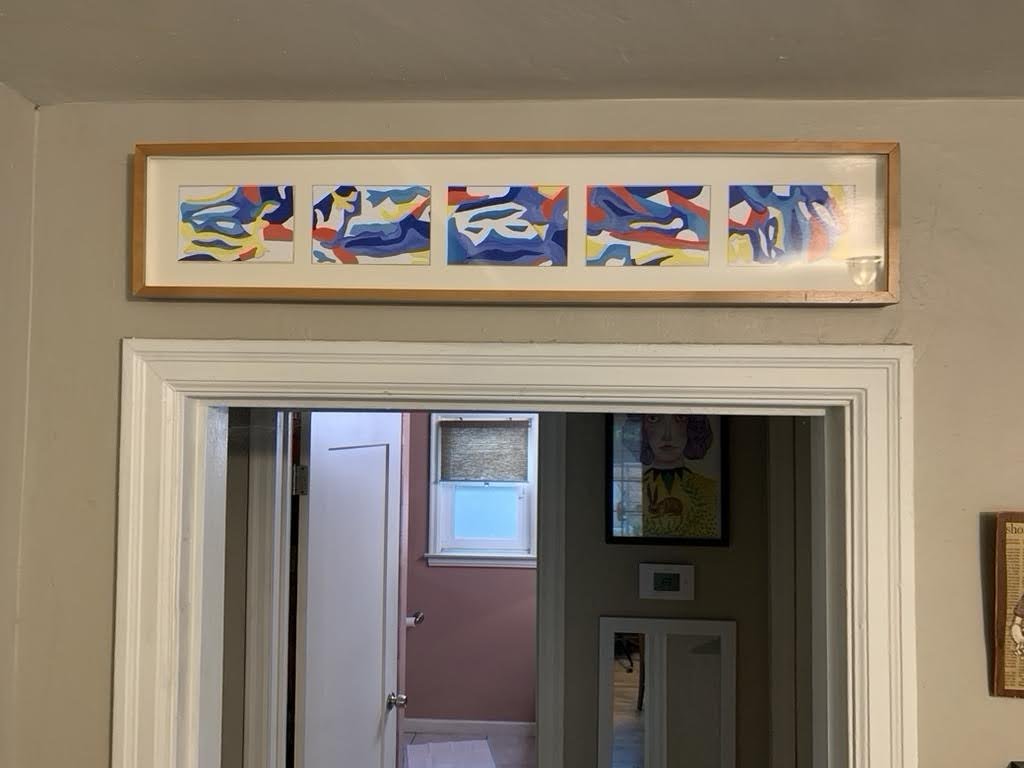
Pontormo abstraction forms (6, 4 x 6 in. each) Gouache on card stock.
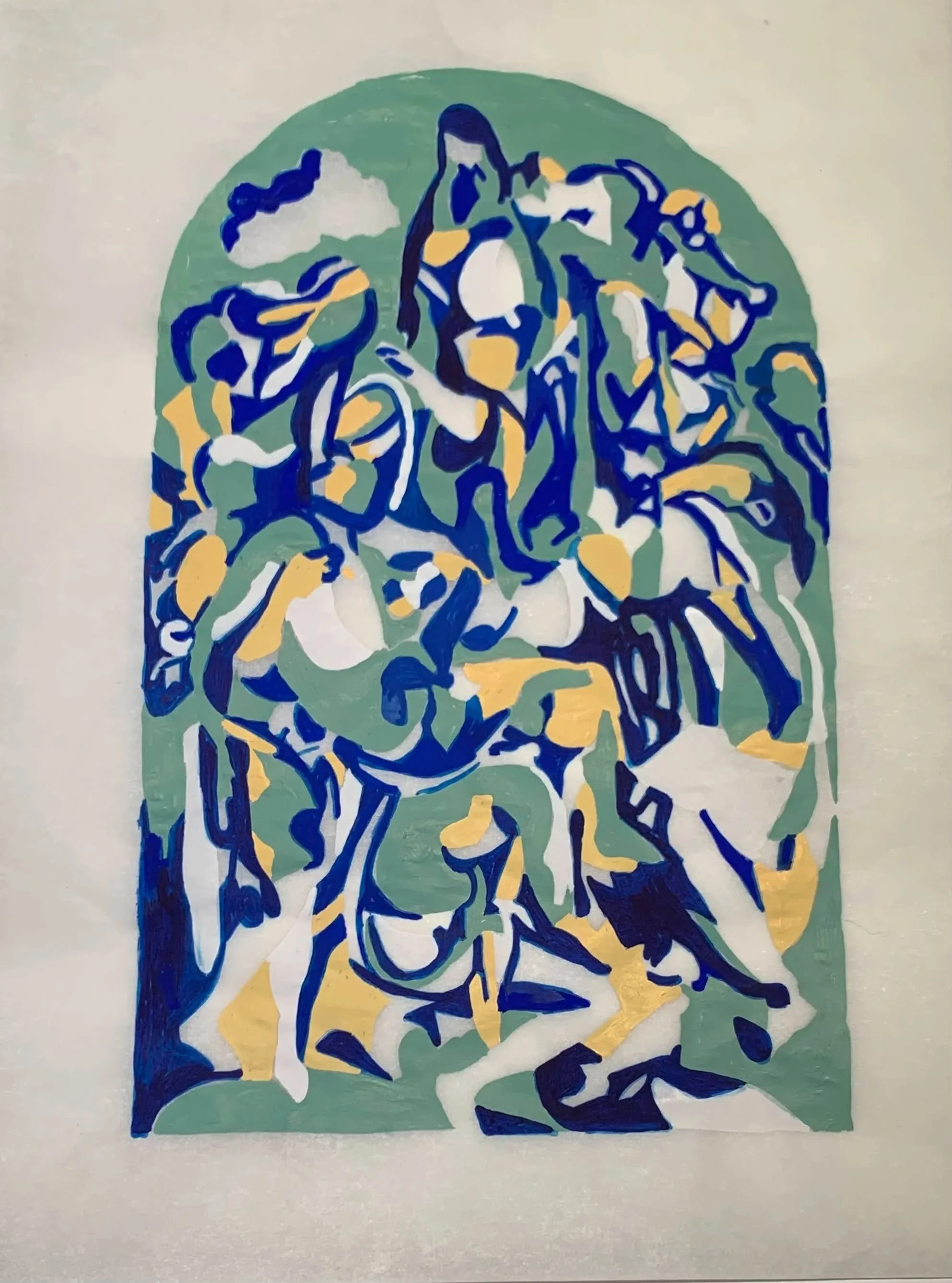
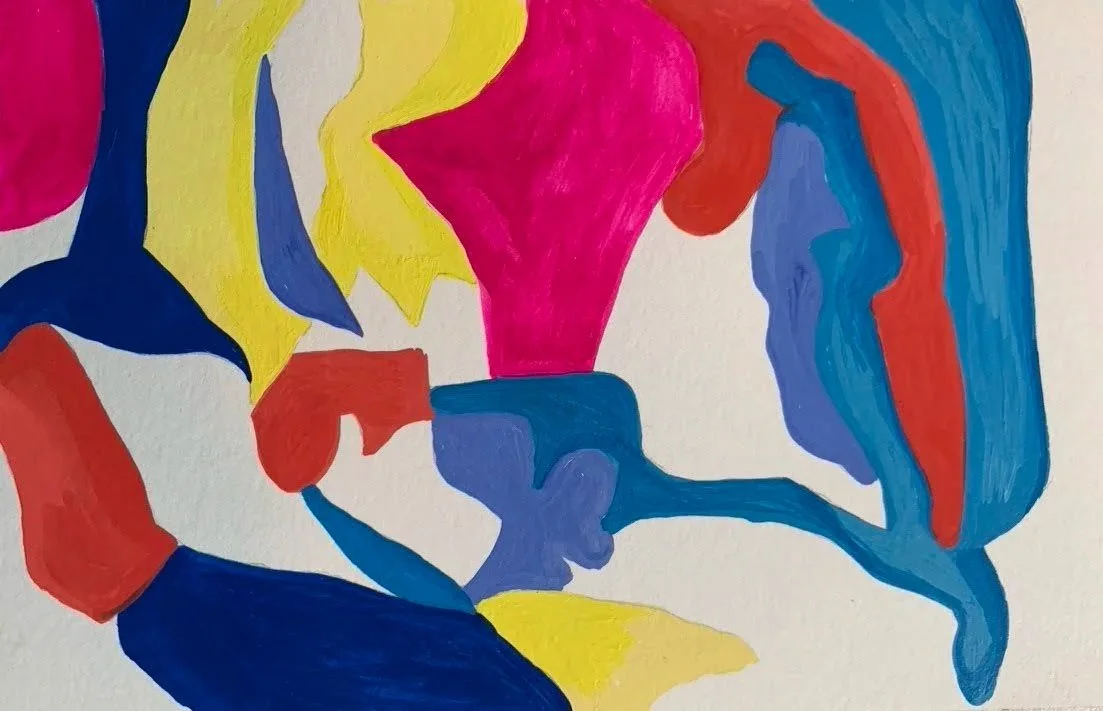
Study: Lamentation Abstraction No. 11 (Pthalo Blue, Naples Yellow, Ultramarine) (2022) Gouache on parchment paper. 9 x 12 in.
Artwork inspired by art history
As an art historian, (MA 2015, California State University Fresno), the history of art is big part of my everyday life. I wrote my thesis about a contemporary artist (The Early Work of Rachel Whiteread and Social Space), but I have taught the history of Western art from the Paleolithic beginning to the contemporary world. My choices as a painter are heavily influenced by the imagery and ideas of the past, from content, color palettes, and composition, to flatness, chance operations, and art brut.
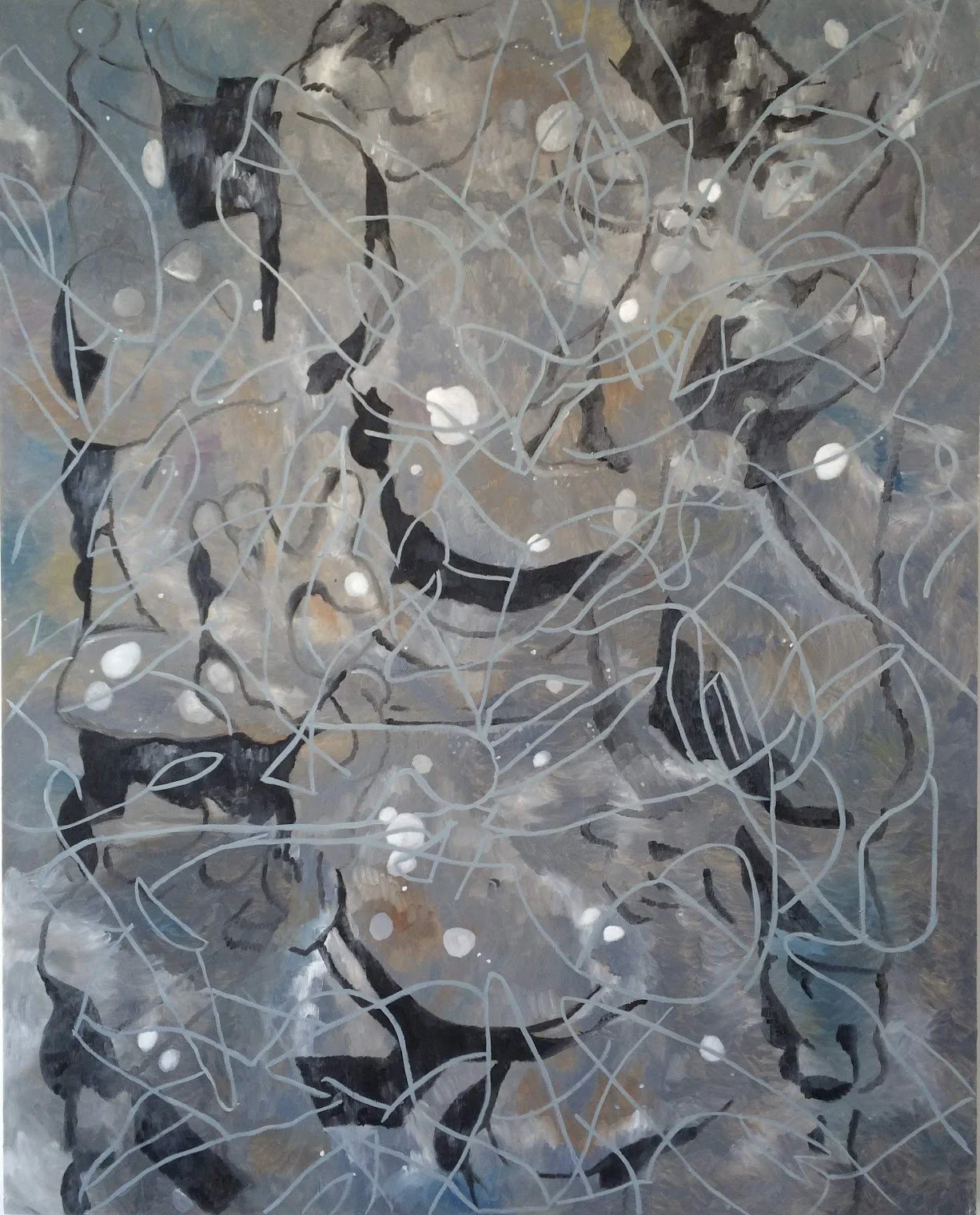
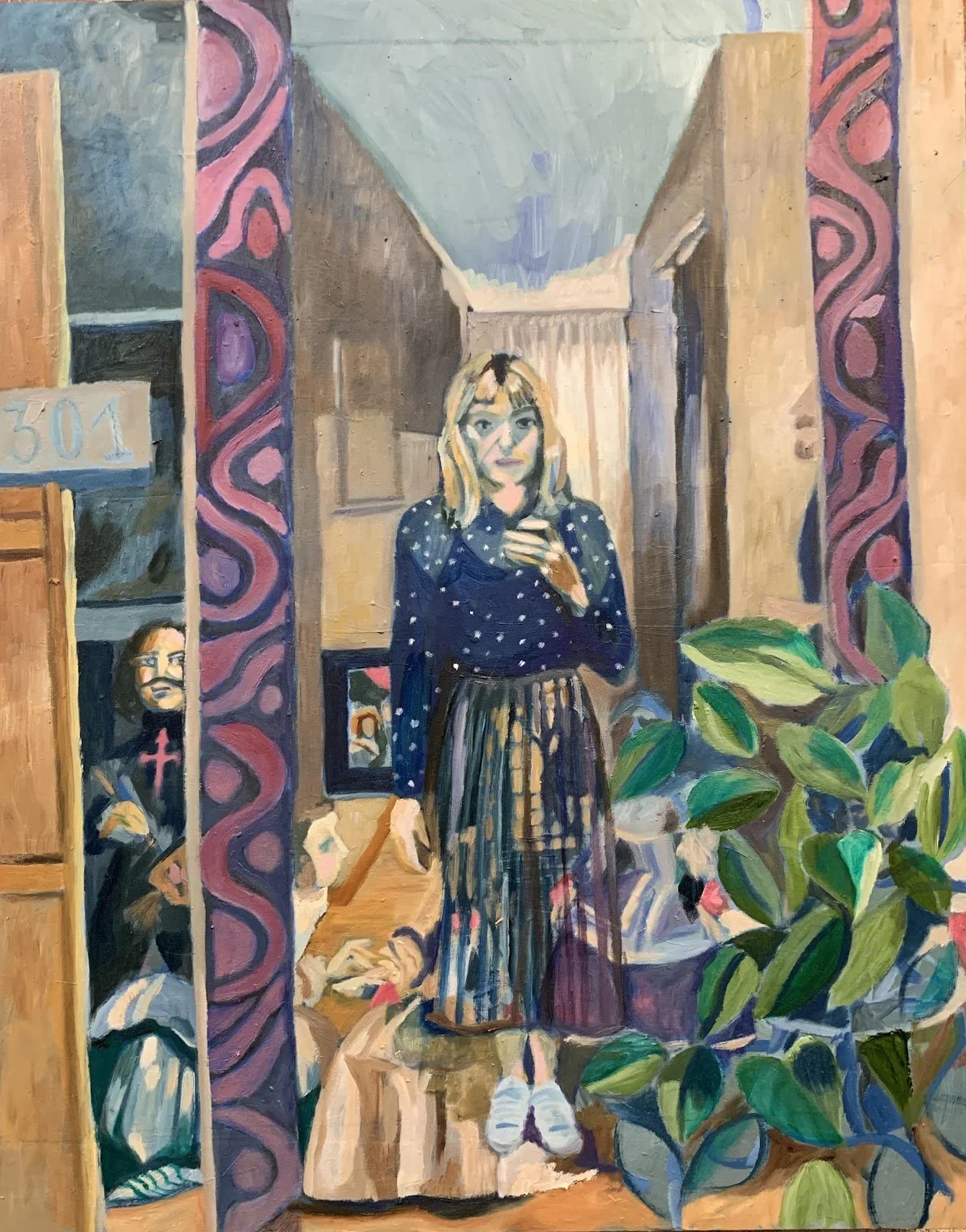
Mash ups and recreations
Above, Left to right:
Balance: The Peril of Abundance (2016) Oil on wood panel. 48 x 60 in. Collection of Gerardo Diaz. The image of Dancing Ganesha was painted from a relief sculpture in the collection of the Norton Simon Museum in Pasadena California
Pensando en la mer es su nombre en la lengua griega (2019) Oil on wood panel. 19 x. 24 in. Collection of Dr. Honora Chapman. A mash up of my daughter and her partner at their lodgings in Spain in the summer of 2017, with Diego Velasquez’s fantastic Las Meninas, including the artist with his palette, and the king and queen reflected in a mirror.
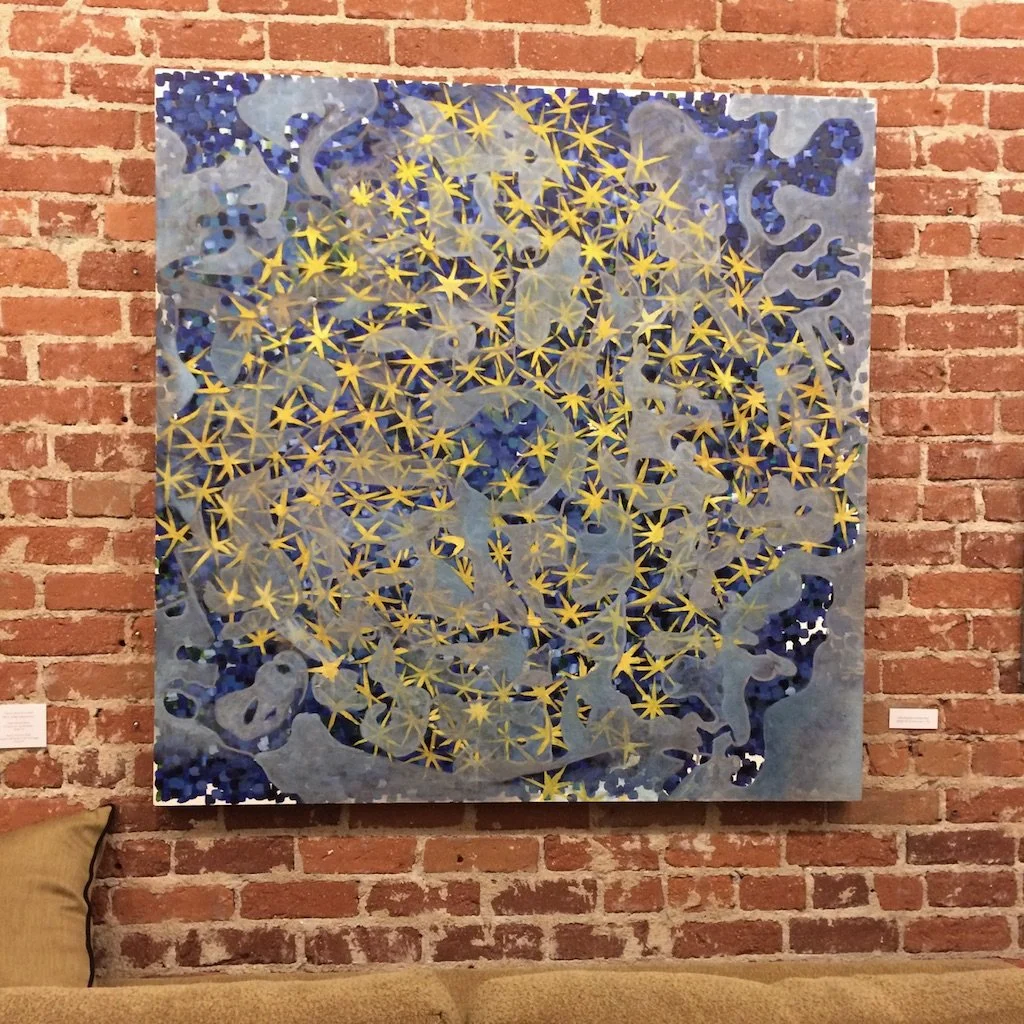
Galla Placidia's invisible bliss (2016) (installation photograph. Oil on wood panel. 48 x 48 in. Collection of Ofelia Jimenez. Another mash up, the mosaic stars in the dome of the small brick building associated with Galla Placidia, a daughter, wife, and mother of emperors, an early Christian site in Ravenna Italy. Layered on top is the imagery of shapes that were lying on the surface of the water inside the costume shop washing machine.
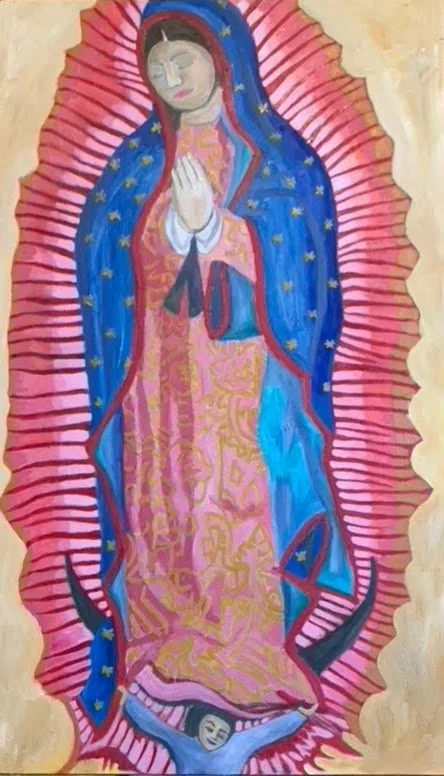
No estoy yo aquí que soy tu madre? (2022) Oil on wood panel. 14 x 24 in. A straightforward copy of the 17th century spanish painting of Our Virgin of Guadalupe.
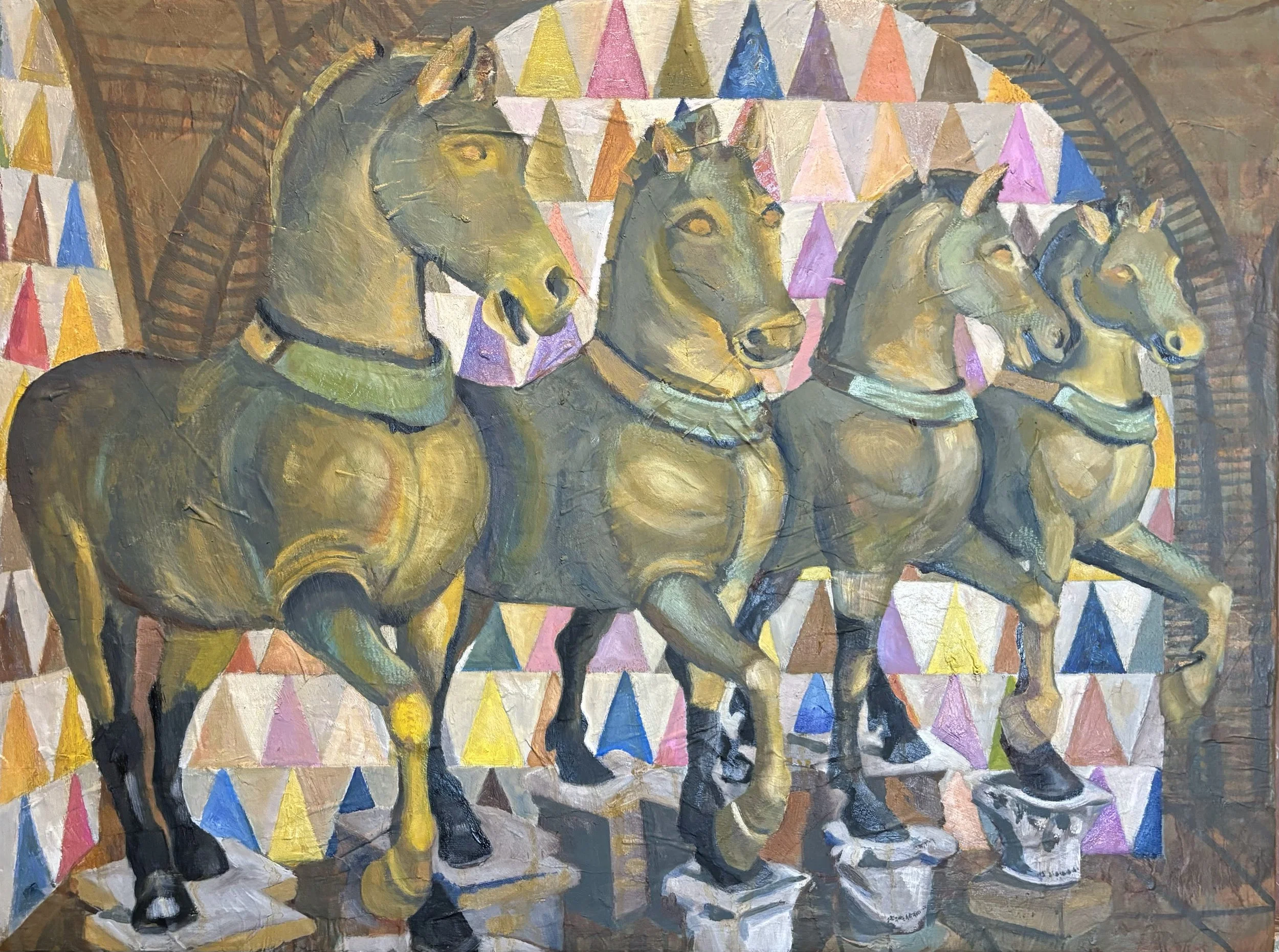
Constantinople's Quadriga of the Hippodrome at San Marco (2024) Oil on wood panel covered in recycled brown paper. Another straightforward rendering, the ancient Roman quadriga is part of the spolia at San Marco Cathedral in Venice, Italy. Included in the background is a pavement pattern from the floor of the cathedral.
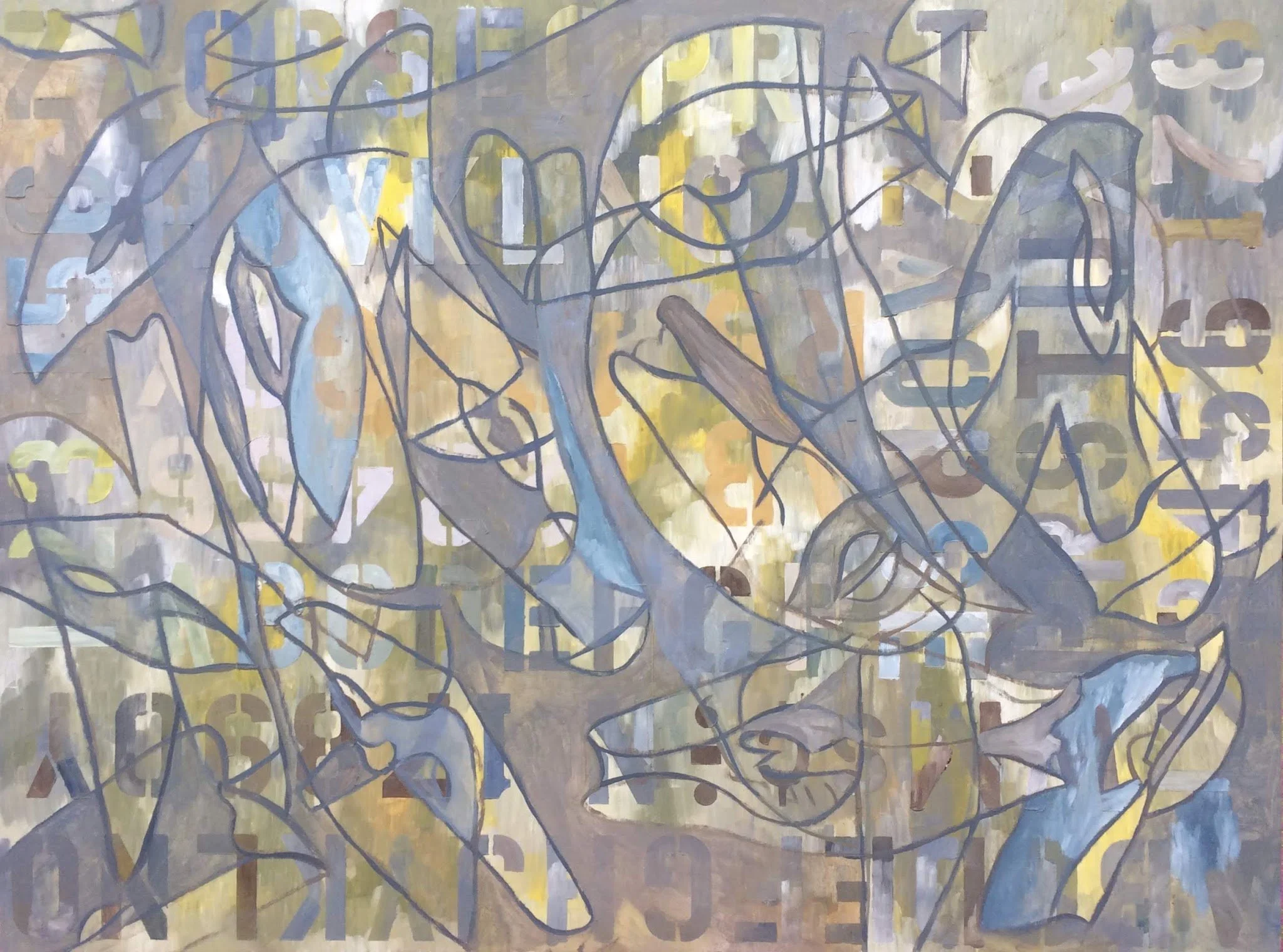
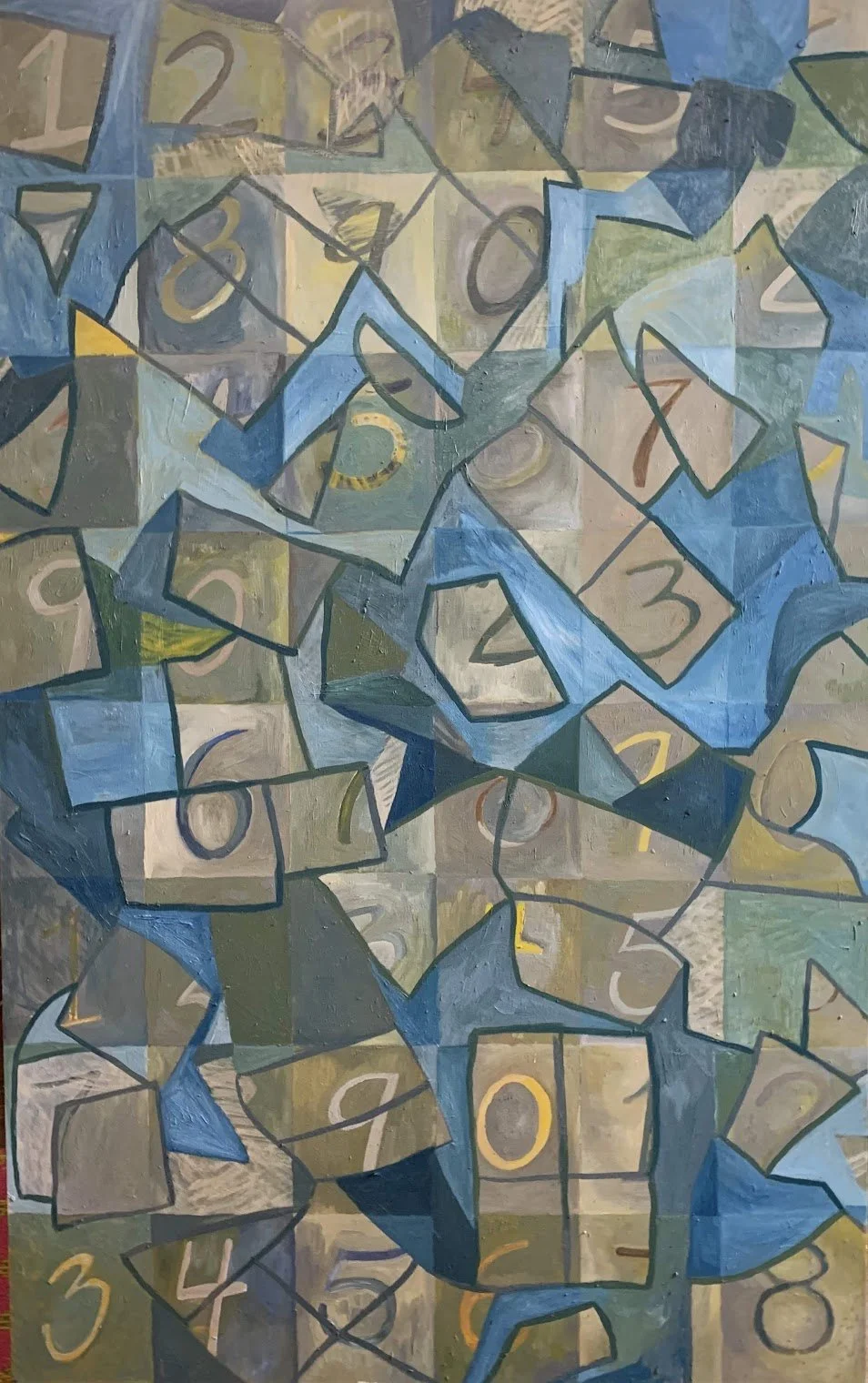
Jasper Johns is known for his use of very familiar imagery like flags and targets, and also number and letter stencils.
Left: Something the mind already knows (2018) Oil on panel 48 x 36 in, includes both number and letter stencils with imagery from sliced apples layered on top. The title is how Johns describes the familiar imagery he uses.
Right: It is a great adventure to contemplate the universe (2016) Oil on wood panel 30 x 48 in. uses a grid of hand painted numbers 1-0 which repeat. Layered on top is imagery of diced eggplant. (The title is something the physicist Richard Feynman wrote).
Conceptual influences
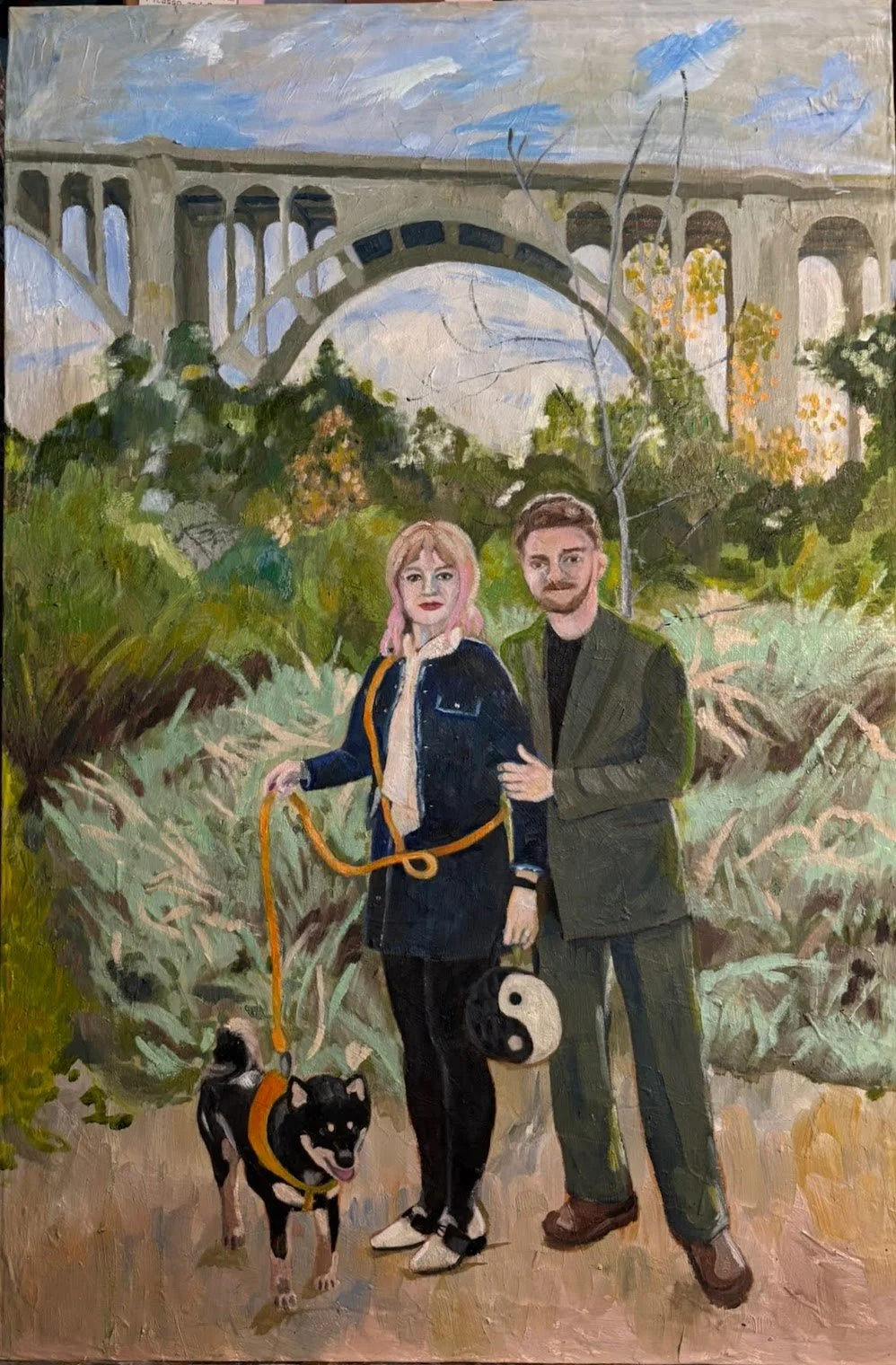
Left: Theatre Flats Series: Pasadena Wedding Portrait; South Arroyo, Friday December 13, 2024 (2025) Oil and pastel on sized muslin panel with brown paper maché. 24 x 36 in. The idea of a wedding portrait is suggested by Jan van Eyck in the Arnolfini Wedding Portrait set in a sleeping chamber, it is filled with symbolic references to domesticity and fecundity. My painting is instead set outdoors in one of the wedded couples favorite spots. Like van Eyck’s work, there is a dog representing fidelity, deciduous and evergreen trees suggest the life cycle, and the bridge the spanning of two individual lives into one.
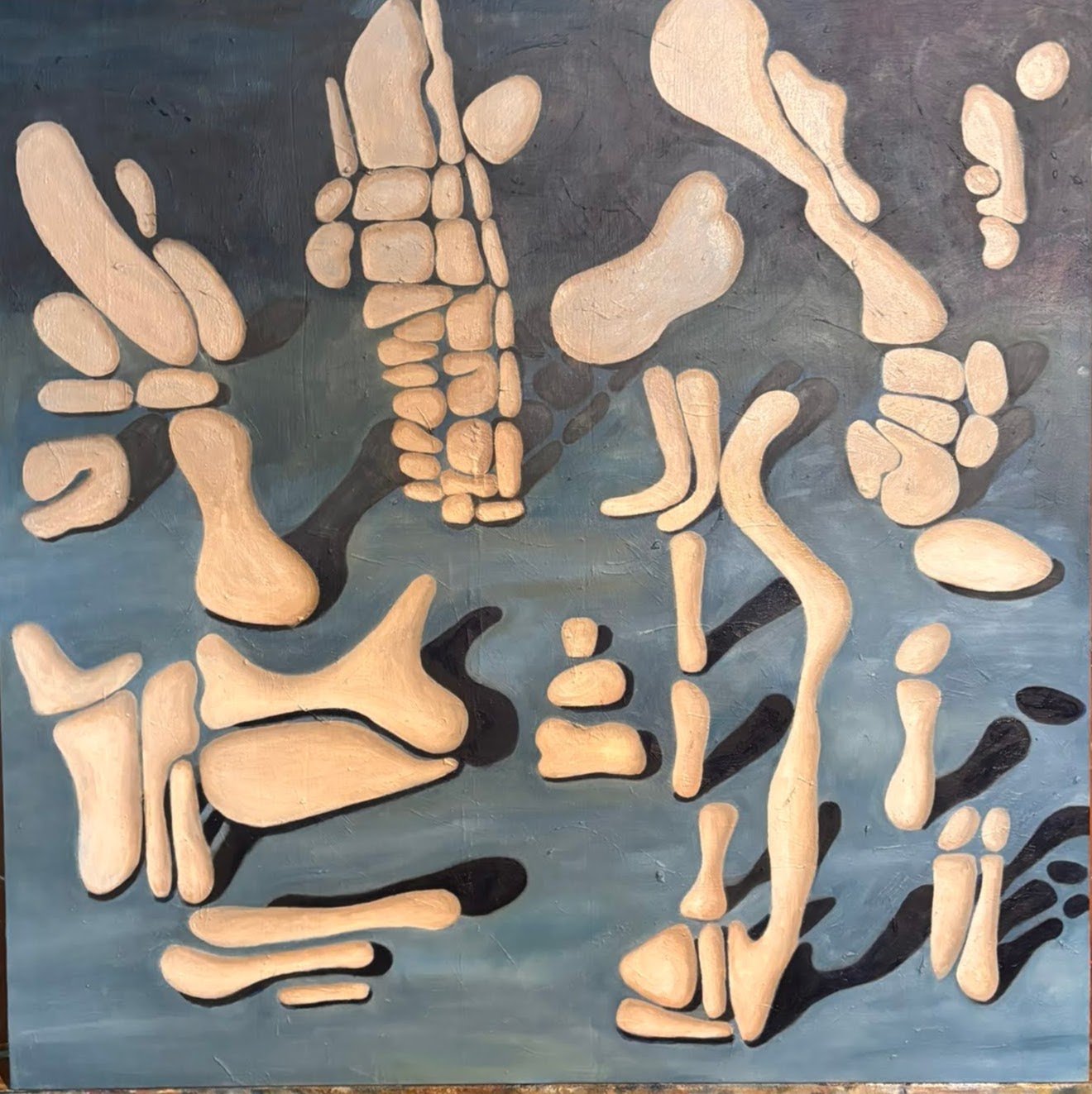
Right: Terrific with the Precarious force of Esoterica; Ode to Yves (2026) Oil on wood panel. Using my own forms generated from sketches of textiles, Ode to Yves references the “beach” paintings of my favorite surrealist Yves Tanguy. The forms are now isolated and cast strong shadows which diminish toward the top of the painting. The painting has an uneven texture, and blobs of paint have been allowed to form on the surface, strongly deviating from Tanguy’s smooth presentation. Like the Cubists, this technique challenges the reception of an illusionistic window into another world by drawing attention to the surface of the painting. The title is associated with Edward Weston’s thoughts about his Pepper #30
Color and Pattern
Left: Something one day comes (2016-2020) Oil on wood panel. 36 x 48 in. The imagery comes from a patch of the ground in the grassy area between where I worked and where I went to class—and later taught class. Grass, twigs, leaves, and the spaces between them. The painting is about how sometimes one event can change your life, and the large blue shapes represent those events in the form of monsters. The art historical reference comes from the color palette in the Temptation of St Anthony in the Isenheim altarpiece painted by Mathias Grünewald.
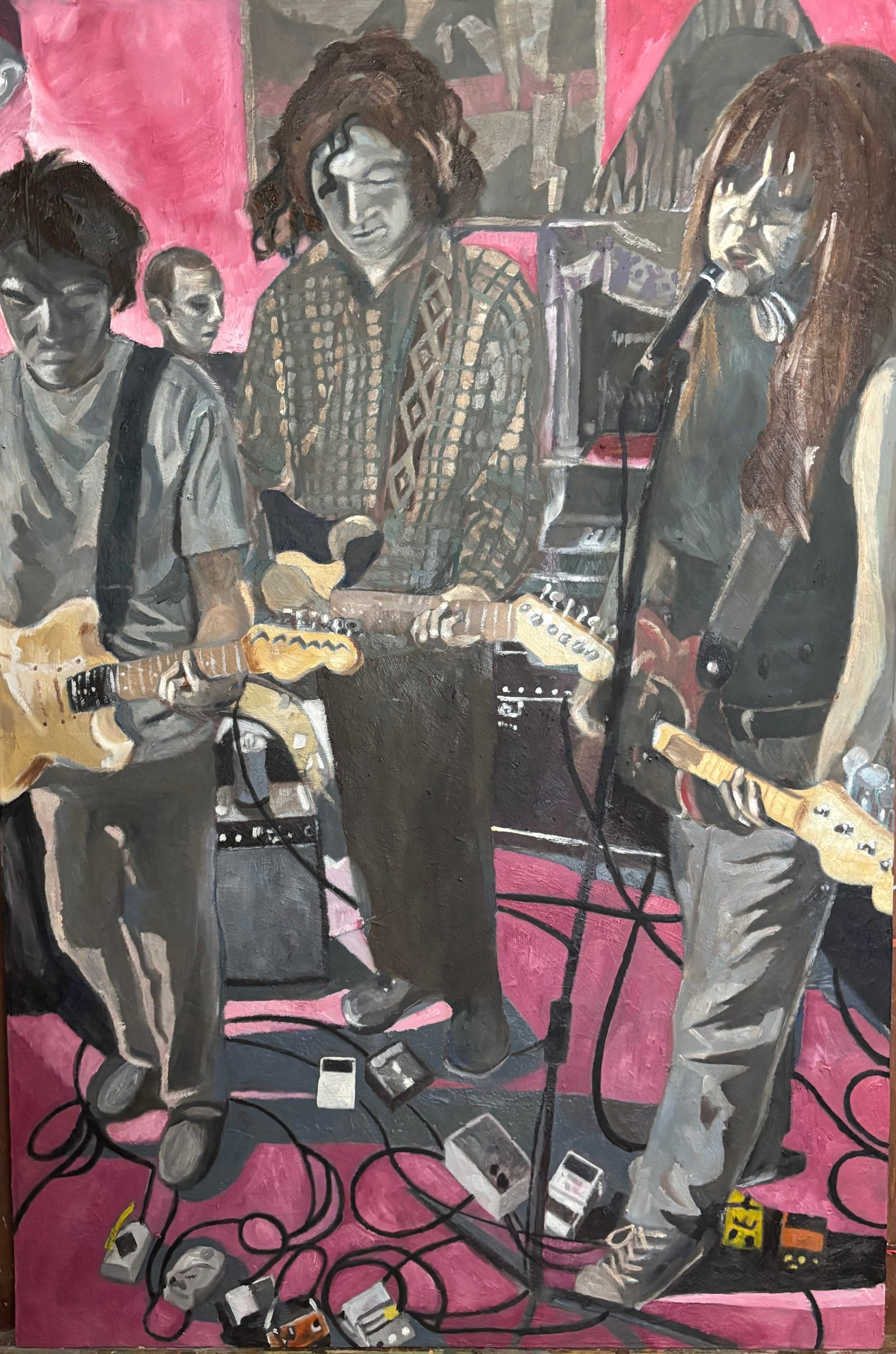
Below Left: Theatre Flats: Semi Trucks summer house show, 2024 (2024-25) Oil on sized muslin. 24 x 36 in. While in progress, use of gray and black in this painting made me think of Philip Guston, so I used his signature pink of the background.
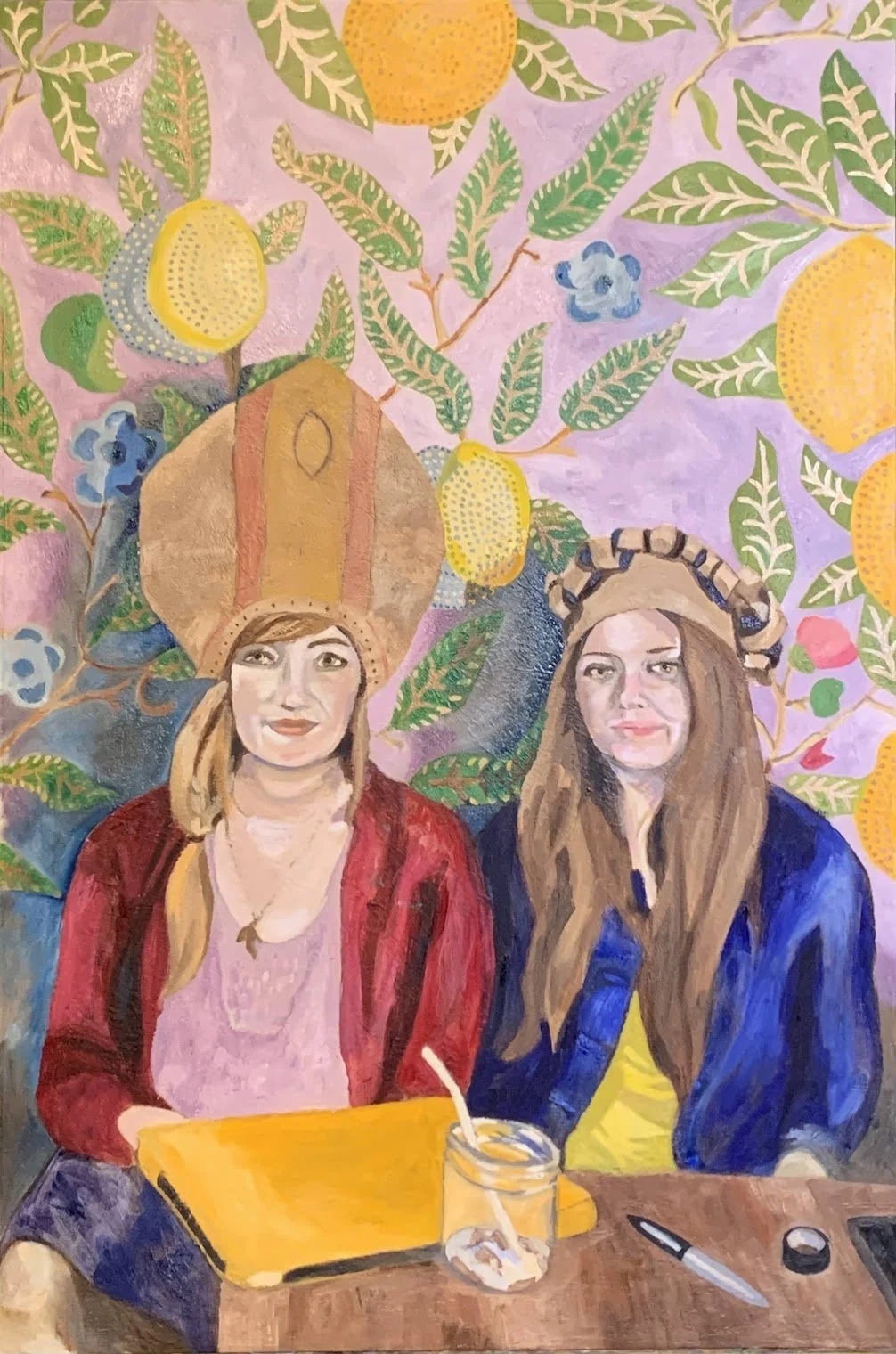
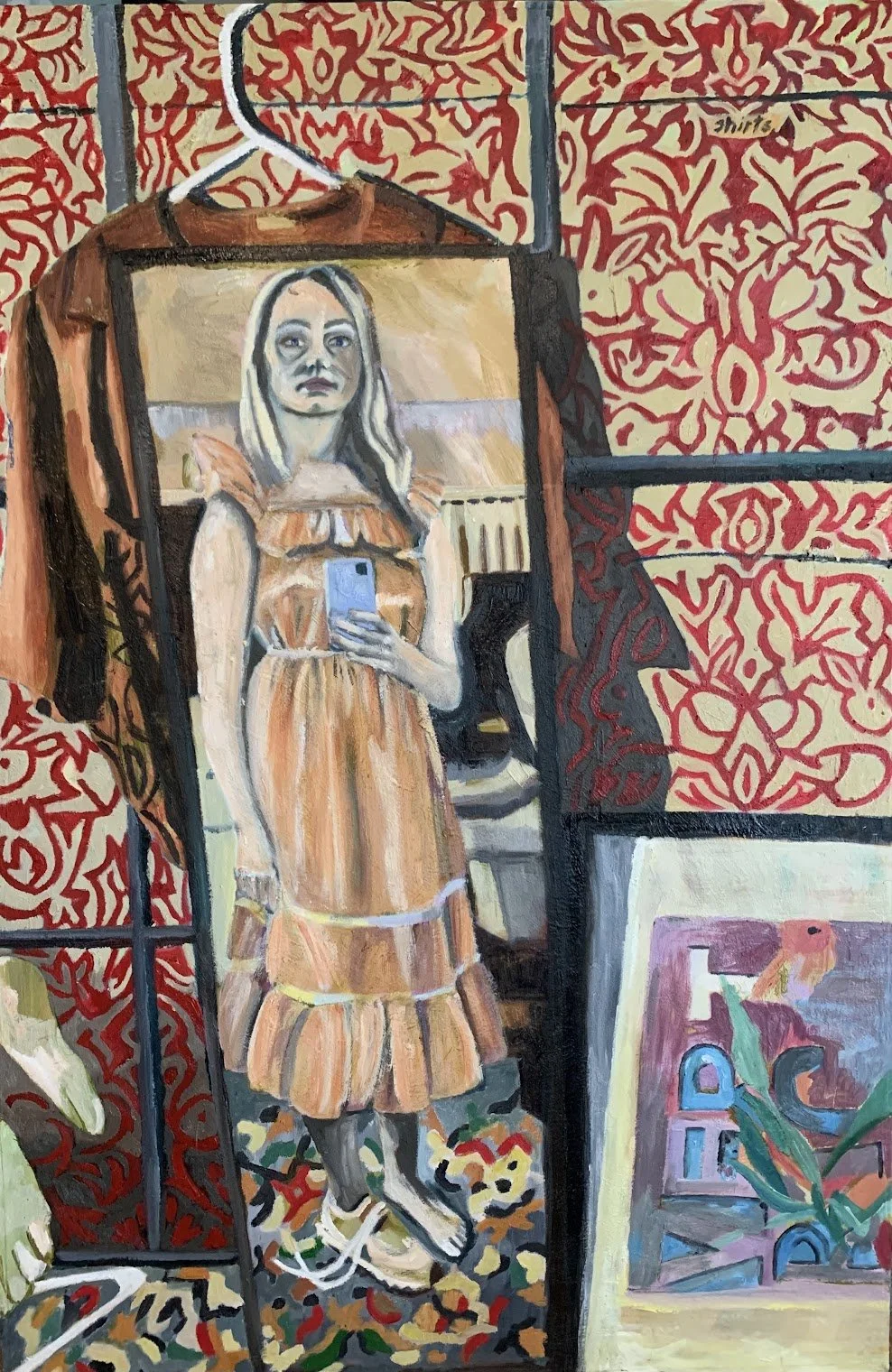
Above center: Theatre Flats: Sava and Danube (2021-22) Oil on blocked muslin. 24 x 36 in. Daughter and niece from photograph of about 2009 in which they wear paper hats for Easter. The title references the rivers in Europe near my mom's people in Croatia and Slovakia. To the background, I added a recolored 19th century William Morris wall paper print, which in addition art history references my lineage on my dad’s side in the British Isles.
Above right: Theatre Flats: At five in the afternoon (or not) (Kallax) (2022) Oil on blocked muslin. 24 x 36 in. The title of this painting from an almagamation of several source images comes from one used by Robert Motherwell. The red pattern is also from William Morris. The painting resting on the floor is my was made by the subject of the artwork.